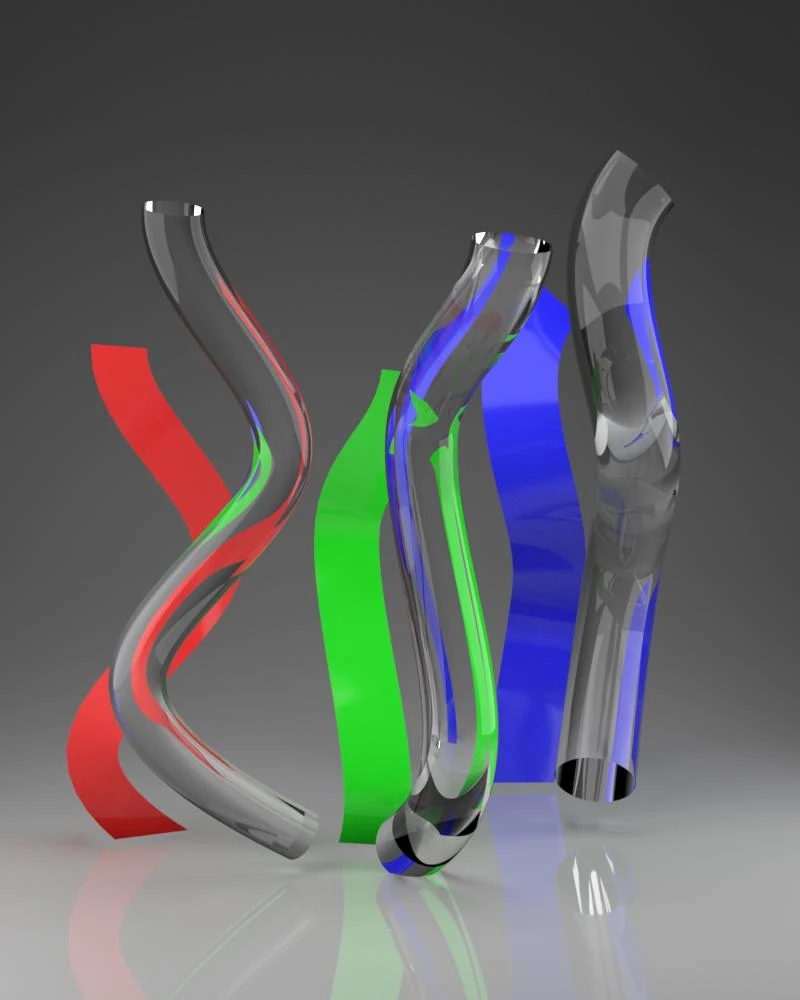
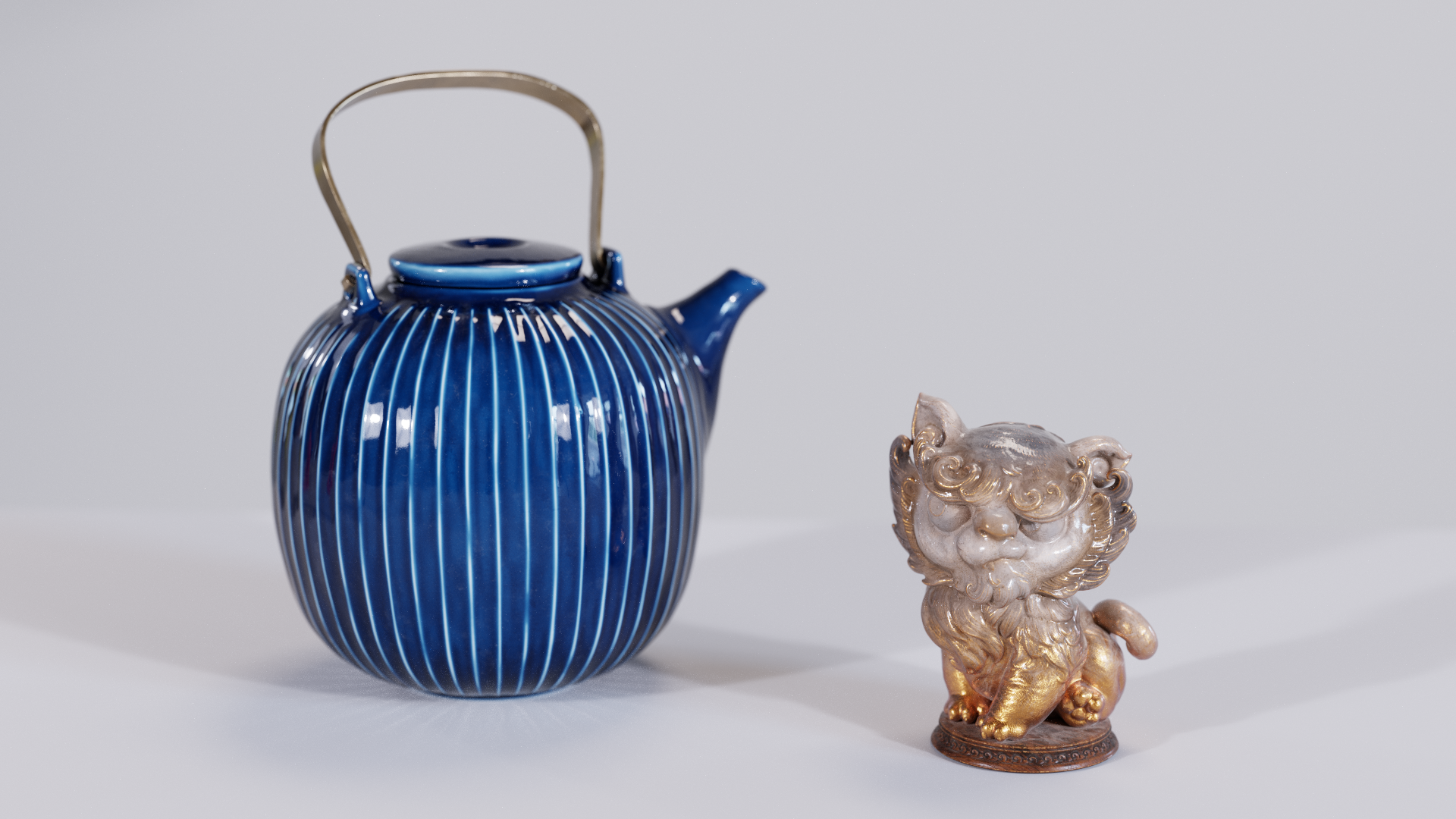
We are excited to share that NVIDIA has contributed two new assets, the MaterialX Teapot and Lion, to the Digital Production Example Library (DPEL), an Academy Software Foundation (ASWF) project that provides the community with free access to production-grade content that reflects the scale and complexity of modern feature film production.
Studios, renderer developers, and researchers rely on DPEL assets to validate that their tools hold up against production-level complexity, not just simplified test scenes. MaterialX Teapot and Lion are constructed as complex, multi-layered materials, utilizing the standard MaterialX node set with no proprietary extensions. It is the first DPEL project to offer multi-layered MaterialX materials at this level of fidelity.
Built entirely using open standards, these assets provide a new level of production material complexity to DPEL, giving developers, researchers, and studios a new benchmark asset for testing renderers, shading pipelines, and look-development tools. Because the assets rely exclusively on the standard MaterialX node set, any tool that supports MaterialX can load and render them, no proprietary dependencies required.
 Inside the Assets
Originally used to showcase neural materials, the MaterialX Teapot and Lion are provided here as MaterialX shader graphs built from standalone BSDFs assembled with layer and mix nodes. The assets use a modular graph structure, combining multiple BSDF components with individual texture inputs, normal maps, and layer-specific controls. They demonstrate a range of MaterialX features, including different normal maps applied to individual BSDFs, UDIM-based texture layouts with 4K to 8K texture maps, blended material responses, and inter-layer effects.
The file structure of the contributed assets is clean, modern, and highly accessible with straightforward implementation for easy integration into existing pipelines:
-
- Unified File Structure: Each asset features a single USD file with embedded material assignments, facilitating immediate loading and rendering in USD-compliant applications.
- MaterialX Specifications: The assets are built using MaterialX 1.38, authored in LookdevX. They rely exclusively on non-proprietary nodes, ensuring complete portability across renderers and digital content creation (DCC) tools.
- Input Color Space: All input texture data is authored in the standard sRGB color space.

Asset Texture & File Breakdown
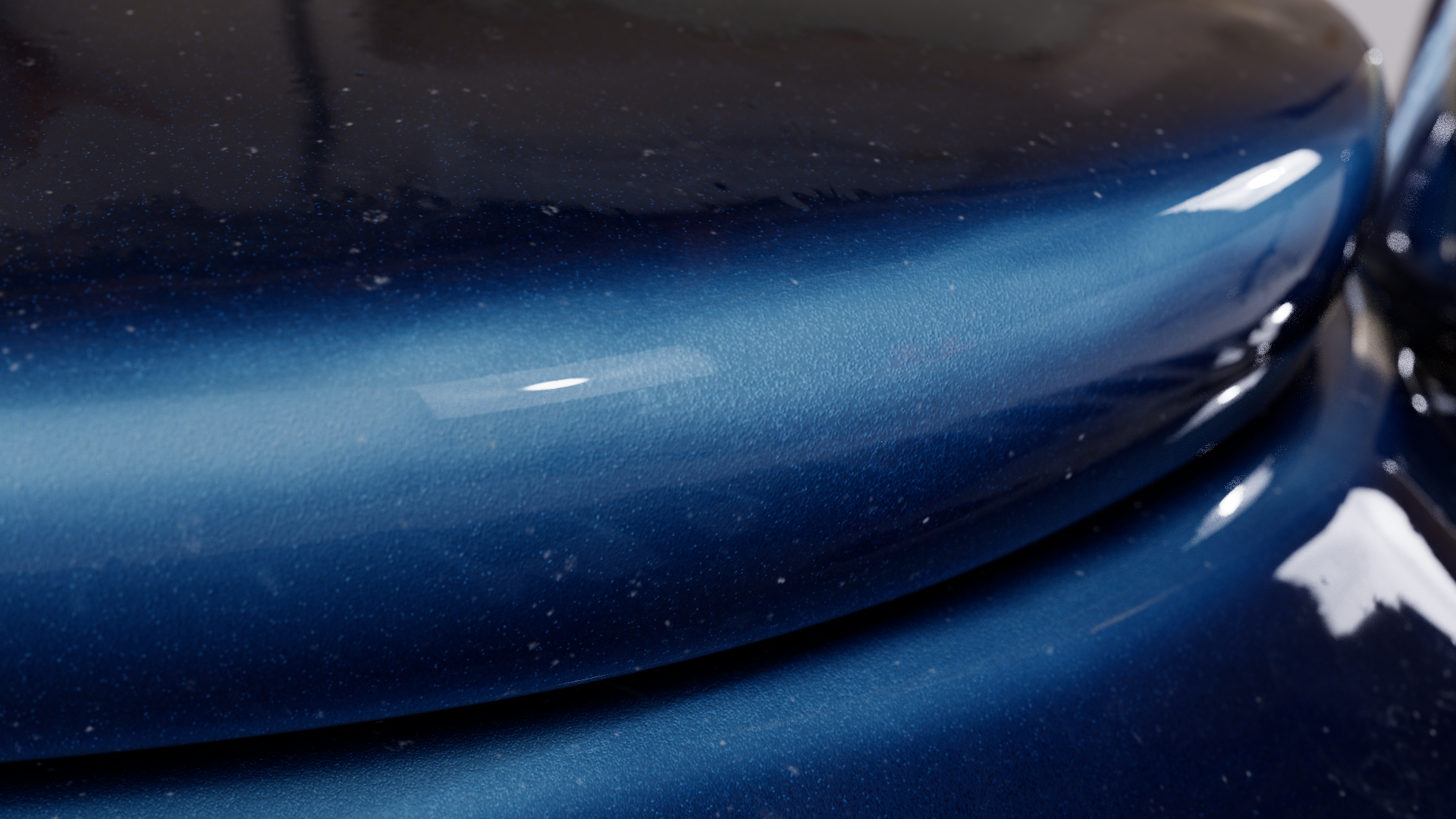
The division of materials and high-resolution textures is structured to mirror real-world physical layers (including classic maps like albedo and normals, alongside specialized masks):
| Asset | MaterialX (.mtlx) Files | Texture Breakdown | Texture Resolution / Format |
| MaterialX Teapot | 2 | • Ceramic Body: 14 UDIMs• Handle: Single texture | • Ceramic: 4k UDIMs• Handle: 8k single texture |
| MaterialX Lion | 1 | • Lion Body: 6 UDIMs | • Lion: 4k UDIMs |
The textures are meticulously organized in individual folders, with each folder corresponding to a physical material layer (e.g., albedo, normals, masks).
For additional information on the MaterialX Teapot and Lion, check out the following:
- SIGGRAPH 2023: Used in the groundbreaking paper Neural Appearance Models].
- SIGGRAPH 2025 Course: Highlighted in Physically Based Shading in Theory and Practice (see Weidlich’s Shading Course Slides).
- SIGGRAPH 2025 Course: Featured in Neural Shading.
- Neural material code for training these materials.
Learn more about the library, its licensing, and its existing assets on the DPEL website or watch the recent MaterialX & OpenPBR Virtual Town Hall for additional details.