Foundry’s Collin Dutter shares four principles for bringing generative AI into production without compromising security, licensing, or creative control.
Open source tools like OpenColorIO, OpenEXR, OpenTimelineIO, and OpenUSD earned their place in studio pipelines by solving shared problems out in the open. So when generative AI arrived, many studios reached for the same playbook: open models, open tooling, self-hosted. At Open Source Days, Collin Dutter, a senior software engineer on the Griptape team at Foundry, explained why that instinct is a good start but not the whole answer.
His talk, “Building Studio-Safe AI Open Source Workflows,” laid out what “safe” has to mean for the motion picture industry, why banning AI backfires, and a practical four-step approach any studio can adopt, whatever tools it uses. Here are the takeaways our community can put to work.
What “safe” means in a studio
For the studios in the room, Collin said, “safe” is specific: footage isn’t leaking, your data isn’t training someone else’s model, and you have provenance over every frame. Lose any of those and you lose control of the pipeline you spent years building.
The challenge is keeping up with the pace of innovation. Artists want to experiment with new models as soon as they become available, with releases happening, as Collin put it, “on a near daily basis.” Studios need to give them a secure environment where they can explore new capabilities without compromising production workflows.
Four doors for a studio exploring AI
- Banning AI isn’t the answer: When studios don’t provide approved tools, artists find their own solutions. This can lead to sensitive footage being uploaded to public AI platforms, creating security and contractual risks. Providing a safe, approved environment is more effective than simply banning experimentation.
- Open source needs orchestration: Open models alone don’t guarantee security or control. Dutter recommends open orchestration layers that connect different models and tools while keeping data and workflows within the studio’s control.
- Security must extend to AI dependencies: As artists use coding agents to build custom tools and integrate new models, studios need safeguards. These include sandboxing untrusted code, restricting file and network access, scanning dependencies, and delaying updates to reduce supply chain risks.
- Licensing and provenance matter: Not every open model allows commercial use. Studios must review licenses before using models in production and track how assets are generated. Tools such as C2PA and basic metadata can help establish provenance.
The takeaway: Build a sandbox, not a wall
Dutter’s framework brings four requirements together:
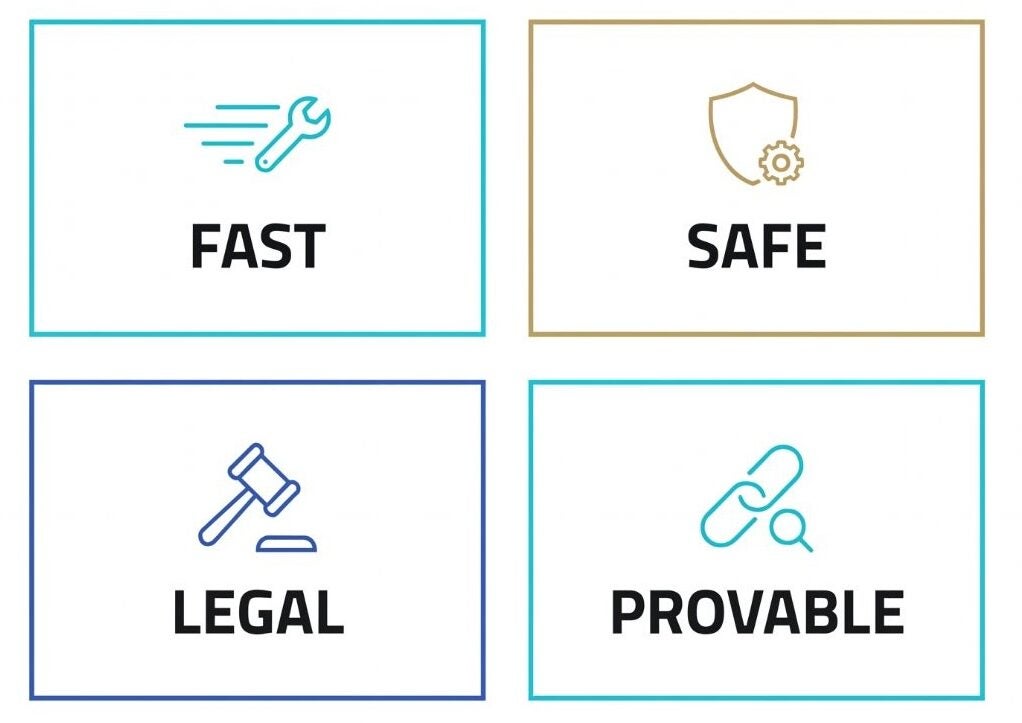
- Fast: Give artists easy access to new models and the ability to build tools that support their workflows.
- Safe: Isolate untrusted code, restrict access, and protect production data.
- Legal: Review model and software licenses before allowing their use in commercial projects.
- Provable: Track the origins of assets and maintain provenance throughout the production process.
These principles allow studios to explore AI without sacrificing the security and control they’ve spent years building into their pipelines.
As Dutter concluded, open source alone won’t make AI safe. The key is to keep AI as one step within a production pipeline that the studio fully controls.
His final message captures the idea particularly well: give artists a sandbox, not a wall.
Thanks to Collin for the great talk. Follow ASWF on LinkedIn, Bluesky and X.